Event catering supplies, planned by event format
Event equipment is bought for the event with the most covers you will run, then used at a fraction of that capacity most weeks. Before ordering, list your formats: seated banquet, buffet, standing reception, conference break, boxed lunch. Each one draws on a different part of the F&B services and equipment department, and the quantities rarely match.
A seated dinner for 200 covers needs a full cutlery and crockery set per guest plus a reserve for breakage and course changes. A buffet for the same guest count needs fewer place settings at once but more service equipment, serving utensils and display pieces. A standing reception relies on trays, small plates and drinks service. Write these numbers down per format and order against the highest.
Sizing quantities from covers
Caterers usually work from the number of covers and the number of courses. For crockery and cutlery, a common approach is one set per cover per course, plus a reserve for breakage, items still in the dishwasher and late additions to the guest list.
Check the pack size on each product page. Cutlery and plates are sold by the pack, and the supplier's minimum may be counted in packs or cartons rather than units. Divide your target quantity by the units per pack and round up.
For consumables such as packaging, napkins and refreshing towels, plan per guest per event and multiply by the number of events in the period you are buying for. Storage space at the venue is often the limit, so compare the carton and pallet data on the product page with the room you have.
Buffet equipment, chafing and display
Buffet service depends on equipment that keeps food at temperature and presents it at a readable height. Chafing dishes, food warmers, risers and display stands make up the buffet line. Suppliers such as Evinoks list buffet and service equipment for banqueting and hotel F&B.
Plan the buffet line from the menu. Count hot dishes, cold dishes and desserts, then decide how many lines you need to serve the guest count in the time allowed. Large events often run two mirrored lines so that guests can serve themselves from both sides.
What to check in buffet specifications
- Heat source: fuel, electric or induction, and whether the venue allows open flames in the room.
- Insert sizes and gastronorm compatibility, so pans move from kitchen to buffet without decanting.
- Material and finish: stainless steel grade, polished or brushed, and suitability for commercial dishwashers.
- Weight, lids and whether pieces nest for transport in the van.
- Power needs for electric units and the number of sockets available in the room.
For induction buffets, check that your pans suit the hob and that the hob size matches the inserts. The pans and induction mats collection covers cookware and mats used on induction surfaces. Ask the supplier for the electrical rating if the product page does not show it.
Trays, ice buckets and drinks service
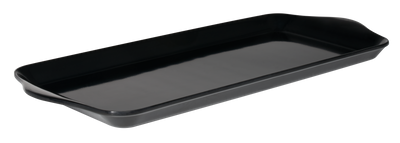
Receptions run on trays. Waiting staff carry canapés and drinks on service trays, bar teams need ice and bottle cooling, and coffee breaks need trays for cups, milk and sugar. The F&B buckets and trays collection groups ice buckets and service trays, and hospitality trays covers presentation trays that also work on coffee stations.
When choosing service trays, check the non-slip surface, the weight when loaded and the diameter against the number of glasses a waiter can carry safely. For ice buckets, compare the capacity with the bottle format you serve and check whether the bucket is double walled, which reduces condensation on table linen.
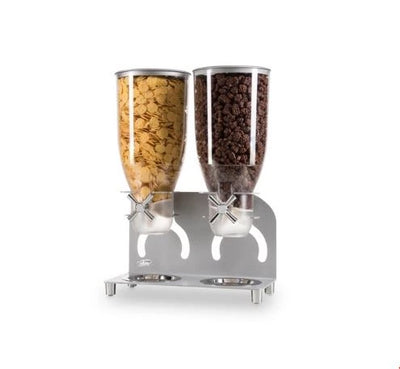
Coffee breaks at conferences use the most equipment in the shortest time, because every delegate arrives at the break together. Plan dispensers, cups and saucers for the full delegate count at once. See coffee and tea for break supplies, cups and mugs for service items and F&B trolleys and dispensers for beverage dispensers and service trolleys.
Cutlery and crockery for banqueting
Banqueting cutlery has to look consistent across hundreds of place settings and survive repeated commercial washing. Buy one pattern in enough depth that a missing piece can be replaced from stock, and ask the supplier whether the pattern stays available for reorders. Amefa lists cutlery ranges, and the wider cutlery, crockery and kitchen utensils collection covers plates, bowls, serving pieces and utensils.
For crockery, check dishwasher and microwave suitability, how well plates stack and the weight per piece, which matters when staff carry stacks between kitchen and room. Rim shape affects how plates sit on banqueting trolleys and in plate warmers. Ask for the carton quantity so you can order in full cartons, which simplifies storage and transport.
Serving utensils are easy to underestimate. Count one utensil per dish on the buffet line, plus spares to swap in during service.
Disposable and eco packaging for events
Boxed lunches, festival catering, outdoor events and grab and go points need packaging that holds food well and suits the venue's waste arrangements. EU rules on single-use plastics have pushed many caterers towards paper, card, wood and reusable alternatives, so check the material composition and the end of life information the supplier gives for each item.
The F&B packaging and kits collection covers food packaging and kits for takeaway and boxed service. When comparing items, check grease resistance, whether the lid closes securely for transport, the stacking strength of filled boxes and the space a carton takes in storage.
If you want branded packaging for a client or a series of events, use a quote request. Suppliers who offer printing can reply with options, minimum quantities and lead times. Plan waste sorting for the same events: the bins collection has containers for front of house and back of house.
Event tables and furniture
Event venues and caterers who own their furniture need tables that fold or stack, pass through standard doors and store compactly between events. The hotel and restaurant tables collection and the broader tables collection list options for dining, buffet and cocktail use, and chairs and sofas covers seating for lounges and receptions.
Check table top dimensions against your banqueting layouts. Round tables are planned by the number of seats per table, rectangular buffet tables by the length of the line. For standing tables, check the height and stability. For all tables, check the weight, the folding mechanism and how a tablecloth falls over the edge. For outdoor events, ask about weather resistance and stability on uneven ground.
Furniture is heavy and bulky, so a quote request is usually the better route than an online basket. State the delivery address, access constraints such as stairs or loading bays, and the date you need the furniture on site. For terraces and winter receptions, the fireplaces collection lists bioethanol and decorative fireplaces. Check the venue's rules on open flames before ordering.
Hygiene, refreshing towels and guest comfort
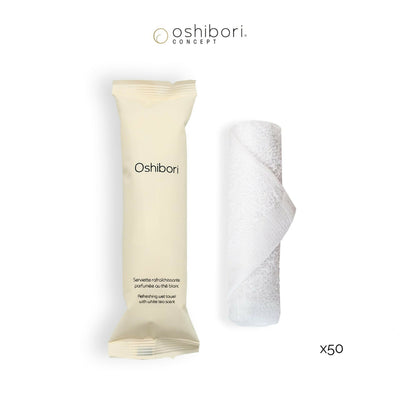
Guests eat with their hands at receptions and buffets, so hand hygiene needs planning at events. Individually packed refreshing towels from the oshibori towels collection can be handed out after seafood, finger food or a long conference session, and wipes and tissue boxes cover napkin stations and washrooms.
For event washrooms, check your stock of hand wash and lotions and the dispensers in soap holders and dispensers. Size consumables on peak attendance, since most guests use the washrooms during the same intervals.
Back of house: kitchen, staff and transport
Event kitchens are often temporary, and caterers bring their own tools to venues with limited fittings. The knives and cutting boards and mitts and holders collections cover hand tools, small appliances covers countertop equipment, and kitchen aprons and uniforms covers staff wear.
Label every crate with its contents and the event it belongs to, and keep a packing list per event format. After each event, whatever is missing or damaged goes onto the next order, which gives you reorder quantities based on real use.
Ordering online or sending a quote request
For standard quantities, create a free trade account, add products from several suppliers to the same basket and pay at checkout. Suitality BV receives the payment and the order is split by supplier, each of which ships from its own warehouse.
For a full banqueting set, equipment for several venues, branded packaging or furniture, send a quote request. One request can go to several suppliers, and each one replies by email with prices, lead time and delivery.
What to put in an event quote request
- Event formats and maximum covers per format.
- Product references, or a description with dimensions, material and finish.
- Quantities in units, and if full cartons are acceptable.
- Delivery address, access constraints and the date the goods must be on site.
- Branding details and artwork for packaging or printed items.
Minimum orders and lead times
There is no site-wide minimum. Each supplier sets its own: a minimum order amount in euros, a minimum quantity per product counted in units, packs or cartons, or both. Check the minimum on each product page before building a basket.
Lead time is shown when the supplier provides it. For dated events, state your deadline in the quote request so suppliers can confirm they can deliver in time. More answers are in the FAQ, and other sectors are listed on the venues page.